- Young forex traders treat funding speed as part of the product, and a failed deposit reads as a platform failure.
- Payment friction behaves like cart abandonment in e-commerce, and every extra step or decline cuts conversion.
- A large share of traders under 40 already hold crypto, making their wallets their most liquid funding source.
- Accepting crypto deposits is a payment upgrade, not a product change, and trading conditions stay exactly as they are.
Young forex traders decide whether to fund an account the same way they decide whether to keep an app: in seconds, based on friction. A three-day wire or a declined card does not read as a banking problem to them; it reads as a broken product. Brokers competing for the next generation of clients are discovering that the deposit screen is the real first impression.
Gen Z Forex Trading Starts at the Deposit Screen
The newest cohort of retail traders did not arrive from banks; they arrived from fintech apps and crypto exchanges. Their reference point for moving money is a transfer that completes before the app closes, so a funding flow built on wires and card forms feels dated before the first chart loads. Gen Z forex trading habits are formed by instant everything, and that standard judges the deposit experience.
The preference is not limited to the youngest accounts. The 30- to 45-year-old group that forms the core of most FX client bases now holds the same expectations, as their daily payment habits have changed as well. Treating modern payment methods as a niche feature for kids misreads the fact that the whole market has already moved.
Payment Friction Is Cart Abandonment by Another Name
E-commerce measured this dynamic years ago: every additional checkout step drops completion, and a failed payment usually ends the purchase. Broker funnels behave the same way. A first deposit that fails cuts the odds of converting that trader by 35 to 50 percent, and younger clients rarely retry with a second method.
They also do not fail quietly. A declined deposit becomes a screenshot, and a screenshot becomes the review that greets your next thousand visitors. Acquisition budgets keep rising, which makes losing an already-convinced trader at the payment step the most expensive failure in the funnel.
Why Crypto Wallets Fit How Younger Traders Hold Money
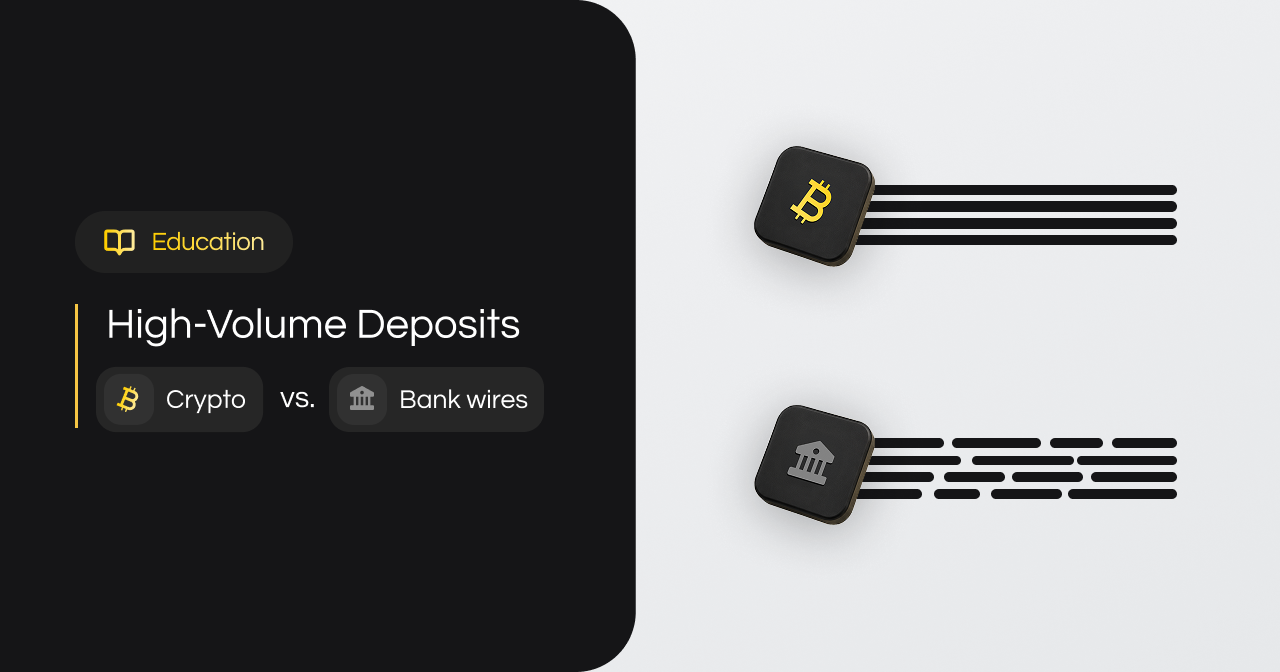
For millions of traders, especially across emerging markets, a crypto wallet is not an investment account but a checking account. Stablecoins hold salaries, savings, and remittances in places where local banking is slow or unstable, and on-chain volume continues to grow at double-digit rates year over year. Asking that client to fund through a bank adds a currency conversion, a delay, and a possible decline to a process their wallet handles in minutes.
Accepting deposits from the wallet removes the friction. A crypto deposit clears in minutes at any hour, ignores card scheme geography, and arrives exactly when the trader’s motivation is highest. Payouts complete the loop, because a withdrawal that lands on Saturday night earns the kind of word of mouth no campaign buys.
Accepting Bitcoin Without Touching Volatility
The standard objection is price risk, and it was solved some time ago. A gateway converts incoming stablecoins to fiat value at a fixed 1:1 rate the moment the transaction confirms, so the broker books the exact USD equivalent and keeps crypto off the balance sheet. Confirmed transactions cannot be charged back, which removes a second layer of cost that cards never will.
Match2Pay wraps this into a setup that an FX broker can run without new headcount: support for the networks traders use, including TRC-20 and ERC-20 stablecoins, Solana, and Binance Pay; direct CRM synchronization; and automated payouts secured by double-confirmation conditions via the CRM API.
Pricing stays flat with 0% markup on stablecoin transactions, no fixed monthly fees, and a regulated broker can accept crypto deposits in roughly 48 hours on the processor or non-custodial model.
The chargeback problem disappears along the way, which finance teams tend to appreciate as much as marketing does. Talk to the Match2Pay team about switching on crypto deposits for your brokerage.
FAQ
Do young traders really prefer funding with crypto?
A large share of traders under 40 hold crypto and use it for everyday transfers, particularly in emerging markets where banking rails are slow. For them, a wallet deposit is the path of least resistance, while cards and wires add friction. Brokers see the difference directly in first-deposit conversion rates.
Does accepting crypto mean offering crypto trading?
No. Accepting crypto is purely a payments decision, and the brokerage’s trading side does not change at all. Stablecoin deposits convert to fiat value at 1:1 on arrival, so clients trade the same FX and CFD instruments as before.
How quickly can a broker start accepting crypto deposits?
With a provider like Match2Pay, a regulated broker can go live in roughly 48 hours using the processor model, which handles custody, compliance, and settlement end-to-end. Non-custodial and white-label setups are available when more control is needed. Integration runs through the CRM, so the client experience stays in one place.