- Pay 0.30% to 1.00% on crypto deposits, against 5% to 10%+ on high-risk card processing.
- Shrink the card volume that sits in a 180-day rolling reserve.
- Send player withdrawals at 0% processing, paying only the network fee.
- Start with no integration fee, no monthly minimum, and no minimum fee per transaction.
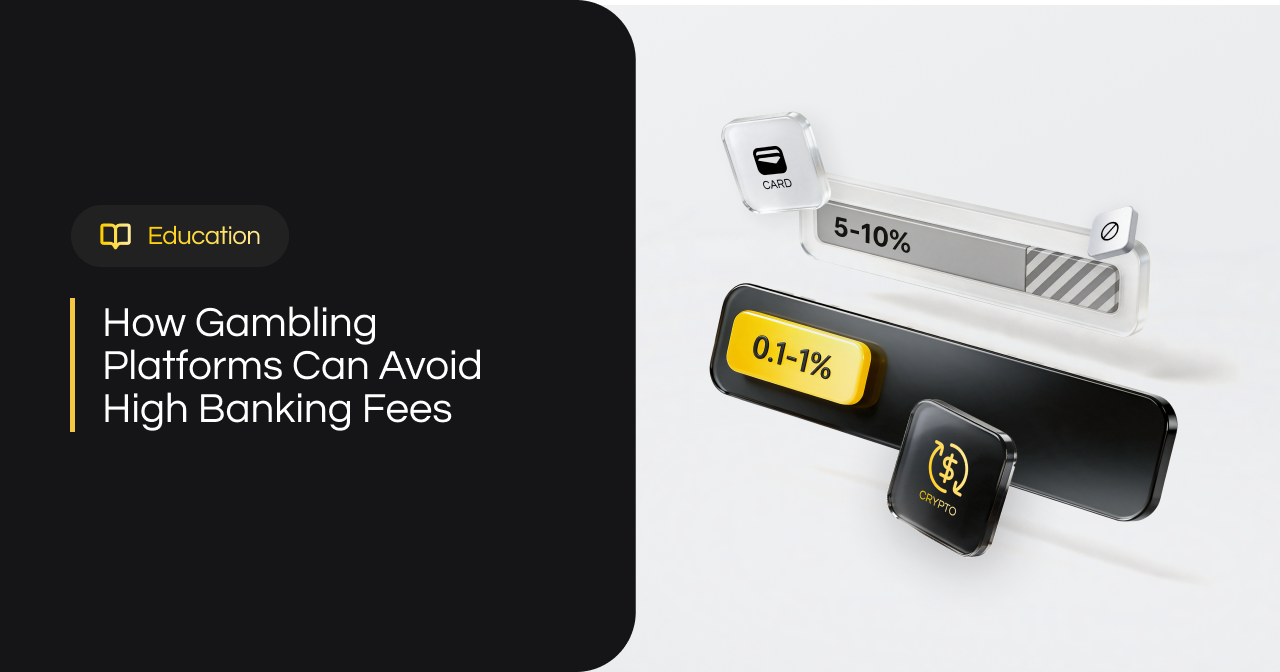
Gambling platforms pay a “high-risk tax” on every card deposit: acquiring fees of 5% to 10% or more with traditional high-risk providers, rolling reserves that typically hold 10% of volume for 180 days, and FX markups on top. To reduce banking fees on a gambling site, move deposits and payouts onto crypto rails, where deposits cost 0.30% to 1.00%, and payouts carry no processing fee. Fixed costs drop as well, with no integration fee and no monthly minimum.
What Is the High-Risk Tax on Gambling Payments?
The high-risk tax is the surcharge banks and acquirers add because gambling sits in a high-risk merchant category. Card acquiring runs 2.5% to 4.5% per transaction for heavily regulated operators and climbs to 5% to 10% or more with traditional high-risk providers.
The higher cost is cash you cannot touch. Acquirers typically hold 10% of volume for 180 days, so the reserve keeps building for six months. On $1 million in monthly card deposits, roughly $600,000 sits in reserve by month six.
How Do You Reduce Banking Fees on a Gambling Site?
To reduce banking fees on a gambling site, move the costliest transactions onto crypto rails:
- Price your real cost per card deposit, including the reserve, FX markup, and dispute losses.
- Offer crypto at the cashier, starting with repeat and high-value depositors.
- Pay withdrawals in crypto at 0% processing, plus an on-chain fee of $1.00 to $2.50 depending on the network.
- Settle in USD stablecoins, where USDT converts to USD at a fixed 1:1 rate.
At a 5% card rate, every $100,000 moved to crypto at 1.00% or less saves at least $4,000. Deposit pricing falls toward 0.30% as monthly volume grows, and Match2Pay pricing stays open to negotiation.
How Do Card and Crypto Fees Compare for Casino Payments?
| Fee line | High-risk card processing | Crypto through Match2Pay |
| Deposits | 2.5% to 4.5%, up to 10%+ | 0.30% to 1.00% by volume |
| Rolling reserve | 10% for 180 days | No chargebacks to reserve against |
| Withdrawals | Per-wire bank charges | 0% plus a $1.00 to $2.50 network fee |
| Currency conversion | 1% to 3% FX markup | USDT to USD fixed at 1:1 |
| Monthly costs | Minimums are common | No monthly minimum |
Because casino payments through Match2Pay carry no monthly fee, a quiet month costs only what it processes. You pay a percentage on what comes in and a network fee on what goes out. For the gateway side, see cutting payment processing fees with crypto.
Request a fee comparison and see how far you can reduce banking fees on your gambling site.
FAQ
Is a cheap iGaming payment gateway a compliance risk?
Not by default. Low crypto fees come from cheaper rails, and compliance runs separately: Match2Pay applies an AML/CFT framework aligned with FATF recommendations, including transaction monitoring and sanctions screening. Ask any gateway to show both.
Do players pay a fee to deposit in crypto?
On-chain deposits cost the player whatever network fee their wallet charges to send. The 0.30% to 1.00% deposit fee is billed to you as the operator, so you decide whether to absorb it.
Can we keep card payments while adding crypto?
Yes. Crypto sits beside your existing methods at the cashier, and Match2Pay’s iGaming payment infrastructure connects with CRMs and payment orchestrators. Every share of volume you shift lowers your blended rate.